CDN NEWS |
  US NEWS







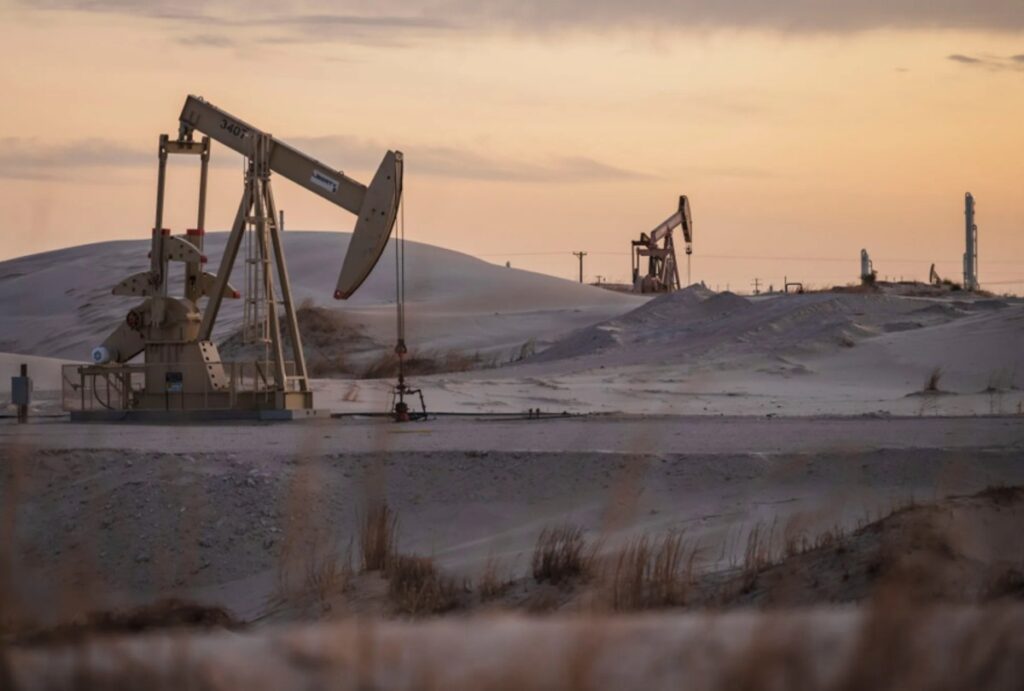
Oil production in the Permian basin is poised to peak in December, a watershed moment for the U.S. shale boom that upended the global energy market over the past 15 years. Yet drilling innovations mean output in America’s most prolific oil patch will hold steady for years to come.
The Permian basin, which straddles West Texas and southeastern New Mexico, is set to produce a record-high 6.76 million barrels per day (bpd) of oil in December, only slightly higher than November’s total, the U.S. Energy Information Administration said in its latest Short Term Energy Outlook. This monthly figure may never be topped, given that most of the Permian’s top-tier oil acreage has been tapped and sharply depleted after more than a decade of drilling.
But improvements in drilling technology are enabling firms to explore new, often deeper formations. That means current production levels can likely be sustained for years, defying previous warnings that the shale boom would experience a precipitous decline.
FAR FROM OVER
The Permian has been the core of American shale oil since the industry took off around 2010, helping the U.S. become the world’s largest oil producer as of 2018. This basin accounted for nearly half of total U.S. production of 13.6 million bpd in 2025. Permian production rose by 400,000 bpd year-on-year in December, which is particularly eye-catching because U.S. oil prices dropped below $60 a barrel this year for the first time since early 2021.
Prices at that level would have sent Permian production plummeting earlier this decade – but things have changed. What’s more, the number of active drilling rigs in the basin dropped by 15% in the third quarter from a year earlier even as production rose, according to the EIA. This highlights the industry’s efficiency gains and its resilience in a lower-price environment. Hammering home this point, the EIA expects Permian output to increase slightly next year, on an annual basis, to an average of 6.56 million bpd, while it also forecasts a sharp drop in global benchmark Brent oil prices from $69 a barrel on average in 2025 to $55 next year, a level where many producers have historically struggled to make a profit.
BIG BOYS’ PLAYGROUND
This newfound resilience partly reflects how the players in the shale game have changed. Permian production – which was mostly the purview of smaller producers in the 2010s – is today concentrated in the hands of a small group of U.S. oil giants including Exxon Mobil, Chevron and ConocoPhillips. They have gobbled up smaller rivals in a string of multi-billion-dollar deals in recent years. This includes Exxon’s $60 billion acquisition of Pioneer Natural Resources in 2024 and Conoco’s $22.5 billion acquisition of Marathon Oil the same year.


The consolidation has helped companies innovate and cut costs, leaving them better able to withstand oil price downturns. None more so than Exxon, which announced on Tuesday that it plans to double its Permian oil and gas output between 2024 and 2030 to 2.5 million barrels of oil equivalent per day (boepd), an upgrade of 200,000 boepd compared with last year’s production forecast.
In a presentation on Tuesday, Exxon CEO Darren Woods said the company is using patented, lightweight proppant to improve hydraulic fractures and artificial intelligence software to better direct drilling paths, which can extend the range of lateral wells to up to 4 miles (6.4 km).
Put together, such innovation will drive drilling costs down by around 40% while increasing oil recovery rates in wells by 50% between 2019 and 2030, Woods said. Chevron, which plans to keep Permian production stable at 1 million bpd through 2040, is now using a technique that allows it to fracture subterranean rock in three wells simultaneously, cutting drilling time and costs.
Exxon and Chevron’s Permian production costs have fallen to around $30-$40 per barrel, lower than the industry average of $62.
So even though the Permian basin is unlikely to again record the stellar growth rates it enjoyed over the past decade, its production is set to plateau at a high level, meaning this region is likely to remain the bedrock of the U.S. oil industry for years to come.
Want to receive my column in your inbox every Monday and Thursday, along with additional energy insights and links to trending stories? Sign up for my Power Up newsletter here.
Enjoying this column? Check out Reuters Open Interest (ROI),your essential new source for global financial commentary. ROI delivers thought-provoking, data-driven analysis. Markets are moving faster than ever. ROI can help you keep up. Follow ROI on LinkedIn and X.
(Ron Bousso Editing by Marguerita Choy)
Share This: