CDN NEWS |
  US NEWS







Suspension of clean energy regulations will make it possible to build new gas-fired power plants to support large data centres
By Robert Tuttle
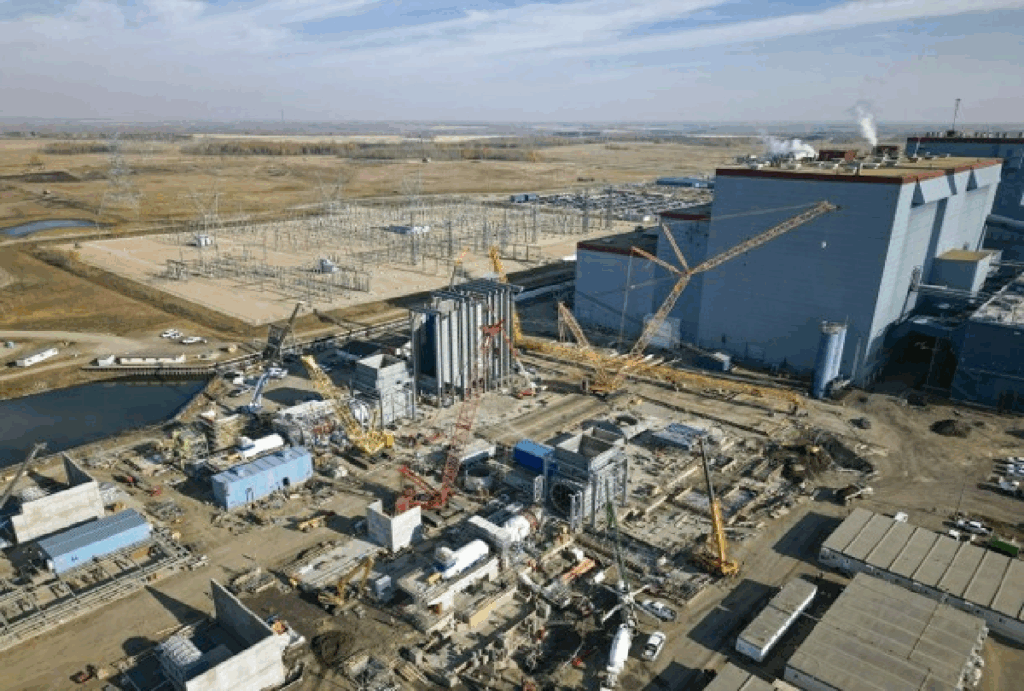
Capital Power Corp.’s top executive says it will become possible to build new gas-fired power plants to support large data centres in Alberta after the Canadian government relaxed environmental standards for electricity.
Prime Minister Mark Carney signed an agreement with Alberta Premier Danielle Smith on Nov. 27 that suspends the Canadian government’s clean electricity regulations while the two governments try to shore up Alberta’s faltering carbon-pricing system.
For Capital Power, the new regime means it’s now feasible to consider expansion of the 1,857-megawatt Genesee site west of Edmonton, chief executive Avik Dey said in an interview. The site was recently converted from coal to gas.
“It’s a site that today could accommodate a 1,000-megawatt, 1 million-square-foot hyperdata centre,” he said. “We think it’s one of the most uniquely situated sites for a large data centre in North America, because it takes advantage of existing infrastructure and transmission.” One gigawatt, or 1,000 megawatts, is equivalent to the power of one traditional nuclear reactor.


Capital Power, an independent electricity producer with a stock market value of almost $10 billion, has been focused on expansion in the United States since former Prime Minister Justin Trudeau brought in rules that would have required power generators to have net zero emissions in Canada by 2050. Those regulations, which also would have imposed annual emissions limits for all covered electricity-generating units, made it difficult to make the economics work for natural gas-fired plants, Dey said.
“We didn’t have any active projects in Canada that focused on large-scale utility generation to support electricity demand growth, or to support industrial buildout,” he said. Once the shelving of the regulations is formalized, “then we’ve got a new paradigm that allows us to look at growth capital” for Canadian projects, he said.
Last month’s agreement with Alberta also does away with a planned cap on oil and gas emissions and declares it’s a “priority” for Canada to build more pipeline capacity to allow more of Alberta’s oil to reach Asian markets. It’s all part of a broader strategy by Carney to lessen his country’s economic dependence on the U.S. after the Trump administration launched a trade war with its northern neighbour, sending relations between the two countries to their lowest point in decades.
Capital Power, which is holding an investor day on Wednesday, would also consider reviving a carbon capture and storage project at Genesee that was cancelled in 2024 because of poor economics, Dey said.
In their memorandum of understanding, Alberta and the Canadian government agreed to raise the price of carbon in the province from $95 per metric ton to a minimum of $130. The two governments have given themselves until April 1 to negotiate a new industrial carbon-pricing agreement.
Bloomberg.com
Share This: