CDN NEWS |
  US NEWS







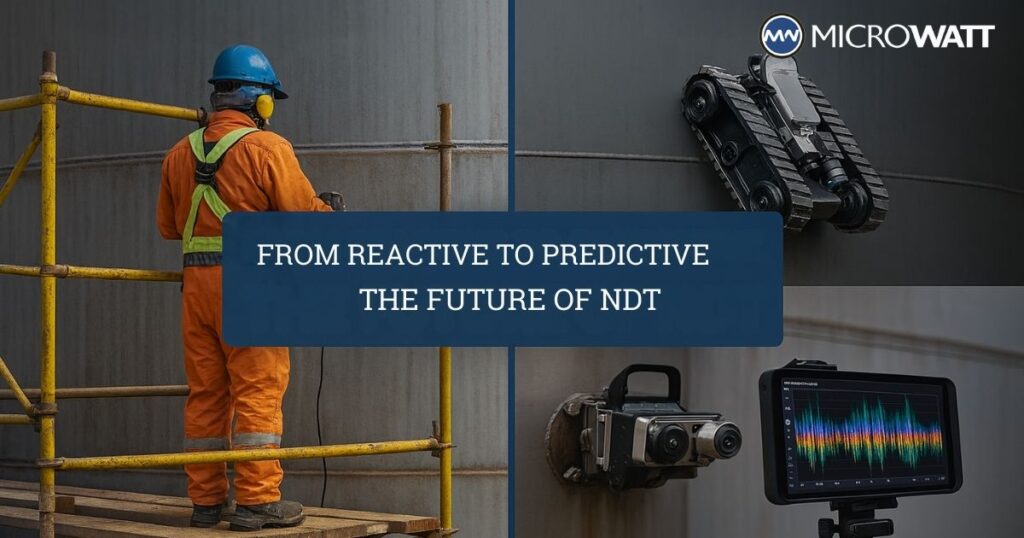
Across the United States, heavy industries—from oil and gas to petrochemicals, power generation, mining, and metals—are operating under increasing pressure. Production demands are rising, labor shortages are growing, and regulatory expectations remain high. In this environment, even a single equipment failure can trigger costly downtime, safety risks, and environmental consequences.
Many operators are now asking a simple question: Can we afford not to invest in reliability?
One of the most effective ways facilities are improving reliability is through advanced Nondestructive Testing (NDT). Once limited to routine checks during shutdowns, NDT has become a powerful toolkit for real-time diagnostics, predictive maintenance, and data-driven decision-making.
From Reactive to Predictive
Traditional NDT methods—ultrasonic testing, radiographic testing, magnetic particle inspection—remain essential, but they typically provide only periodic snapshots of asset condition. That’s becoming insufficient in a world where uptime, safety, and efficiency are top priorities.
Modern NDT technologies now provide continuous monitoring, remote analysis, and advanced visualization. This shift enables maintenance teams to anticipate failures before they occur, extending asset life and reducing both operational risk and unplanned downtime.
For many operators, NDT has moved from a compliance requirement to a strategic investment.
Acoustic Imaging: Faster Leak Detection
Acoustic imaging has quickly become one of the most effective tools for locating compressed-air leaks, gas leaks, and mechanical issues. Using arrays of microphones and sophisticated algorithms, acoustic cameras convert sound into visual maps that pinpoint the exact source of anomalies—even in loud facilities.
The technology helps identify failures earlier, cut energy waste, and improve plant safety.
Vibration Cameras: Instant Analysis Without Sensors
Traditional vibration analysis relies on mounted accelerometers, which can be time-consuming to install and maintain.
Vibration cameras offer a contactless alternative by visualizing vibration patterns that the human eye can’t detect. This allows technicians to diagnose misalignment, imbalance, looseness, and bearing issues in minutes—without shutting down equipment or attaching hardware.
The speed and flexibility of vibration cameras make them ideal for large facilities with multiple rotating assets.
Robotic Inspection: Safer Access, Less Downtime
Confined spaces, elevated equipment, and hazardous environments have long made inspection work challenging. Remotely operated robotic crawlers are changing this.
Equipped with cameras, lighting, and advanced sensors, robotic platforms can inspect tanks, vessels, offshore equipment, and high-temperature zones without exposing personnel to risk. They also eliminate the need for scaffolding or extended shutdowns—reducing cost and improving safety.
Magnetic Crawlers: Multi-Sensor Power in One Pass
Magnetic crawlers have evolved into mobile inspection hubs capable of carrying ultrasonic probes, LiDAR, laser scanners, eddy current sensors, and high-definition cameras.
A complete tank inspection that once required days of scaffolding and confined-space entry can now often be performed in a single robotic deployment—no human entry required.
The Road Ahead
As digital twins, AI-driven diagnostics, and cloud-based monitoring continue to expand across U.S. industry, advanced NDT will play an increasingly central role in improving reliability and reducing operational risk.
Read the Full Article
This overview is a condensed version of our deep dive into the future of NDT and predictive maintenance. To explore all the technologies, examples, and insights: Read the full article here
Microwatt Controls
Calgary, Alberta T3K 2M4
TF: 1.888.388.1592 | [email protected]
Share This: