CDN NEWS |
  US NEWS







By Niccolo Conte | Editing Bruno Venditti | Design Christina Kostandi
Key Takeaways
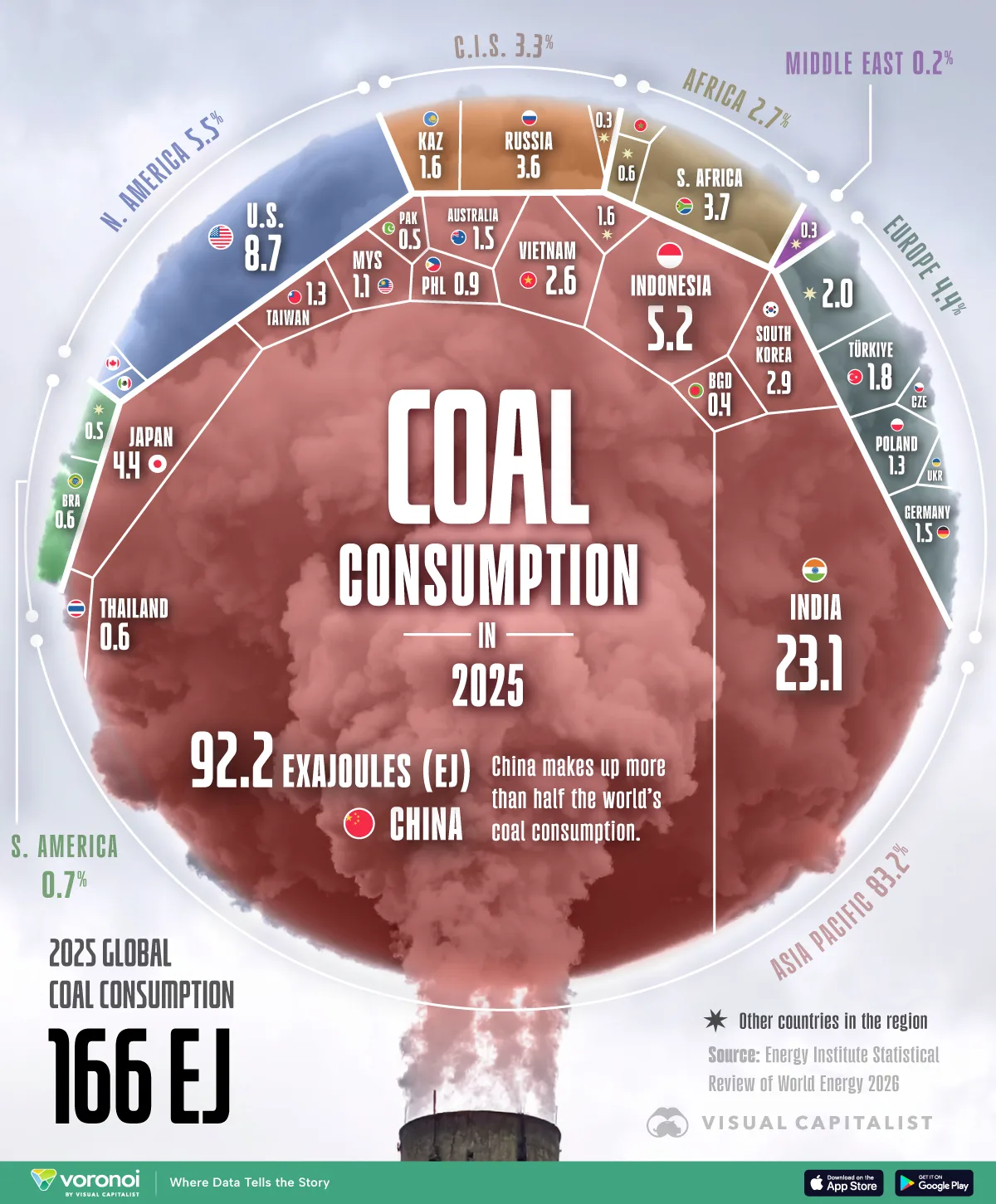
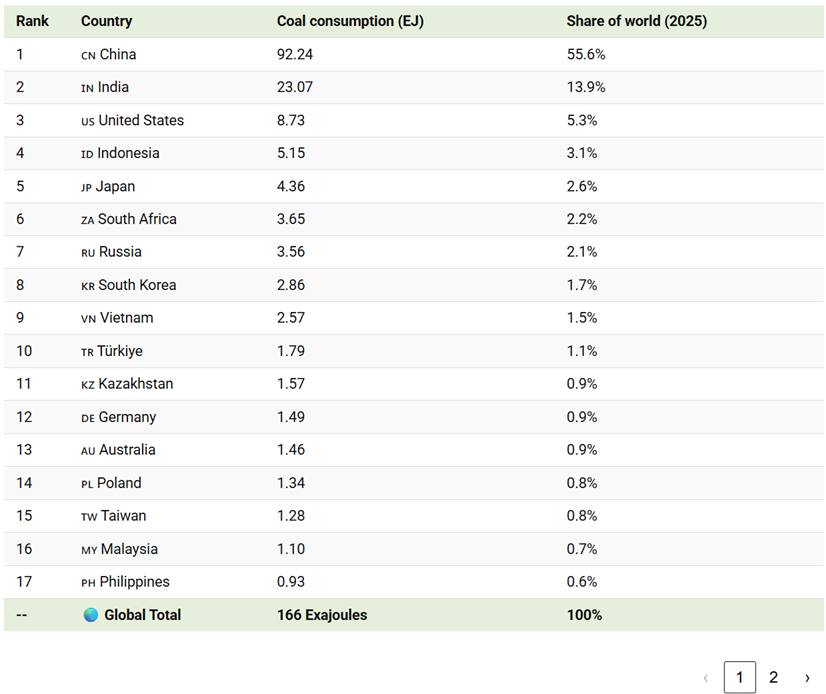
- China accounted for 55.6% of global coal consumption in 2025, using more than the rest of the world combined.
- China and India together consumed roughly 70% of the world’s coal.
- Global coal consumption reached a record high for the sixth consecutive year.
Coal remains the world’s largest source of electricity generation, even as countries invest heavily in renewable energy.
This graphic ranks countries by coal consumption in 2025, revealing the scale of Asia’s influence on global demand.
The data for this visualization comes from the Energy Institute’s Statistical Review of World Energy 2026. It measures primary coal consumption in exajoules (EJ) during 2025.
China and India Dominate Global Coal Demand
China remains by far the world’s largest coal consumer, using 92.2 exajoules in 2025—more than four times India’s total.
China’s outsized demand reflects the scale of the country’s electricity system, industrial base, and coal-dependent manufacturing sectors.
India ranks second at 23.1 EJ, accounting for nearly 14% of global consumption.
Together, China and India consume roughly 70% of all coal used worldwide, highlighting the central role of coal in powering their growing economies.



The United States ranks third with 8.7 EJ, followed by Indonesia at 5.2 EJ and Japan at 4.4 EJ. Combined, these three countries consume less than one-fifth of China’s total.
Emerging Asia Continues to Drive Growth
Although coal-fired electricity generation in China and India declined for the first time in more than 50 years, overall global coal demand still increased in 2025.
Much of the continued growth came from rapidly industrializing economies across Southeast Asia.
Indonesia and Vietnam have both more than doubled their coal consumption since 2015 as they expanded coal-fired generating capacity to meet rising electricity demand.
Indonesia is now the world’s fourth-largest coal consumer, while Vietnam ranks ninth after another decade of rapid growth.
Across much of Asia, coal remains a relatively affordable and reliable energy source for supporting manufacturing, urbanization, and rising electricity needs.
Coal Demand Remains Resilient Elsewhere
The United States recorded one of the largest year-over-year reversals in 2025. Coal consumption rose 10% as higher natural gas prices prompted some utilities to shift back toward coal generation, reversing two consecutive years of double-digit declines.
Meanwhile, coal consumption continues to fall across many advanced European economies as coal plants retire and renewable energy expands.
Germany, Poland, and Czechia remain among Europe’s largest coal consumers, but most other European countries account for only a small fraction of global demand.
While the long-term energy transition continues, the latest data shows that coal remains deeply embedded in the U.S. energy system and across the global economy.
Share This: