


 CDN NEWS |
  US NEWS







By API – American Petroleum Institute
The situation in the Middle East remains highly uncertain with renewed escalation, and energy markets continue to respond to each new development. Over the past several weeks, crude oil and gasoline prices have swung sharply higher and lower as markets reassess evolving geopolitical risks.
Yet despite those twists and turns — and price increases in recent days — both remain well below their May peaks, reflecting a market that has proven remarkably resilient through one of the most significant global supply disruptions in decades.
That resilience has also renewed an important question: If crude oil prices can move dramatically from one week to the next, why don’t gasoline prices always move the same way? This week’s American Energy Snapshot explains why.
Two markets. Two timelines.
When you pull up to the station, you put gasoline in your car, not crude oil. The two are closely connected, but they are different products traded in different markets with their own supply, demand and pricing dynamics.
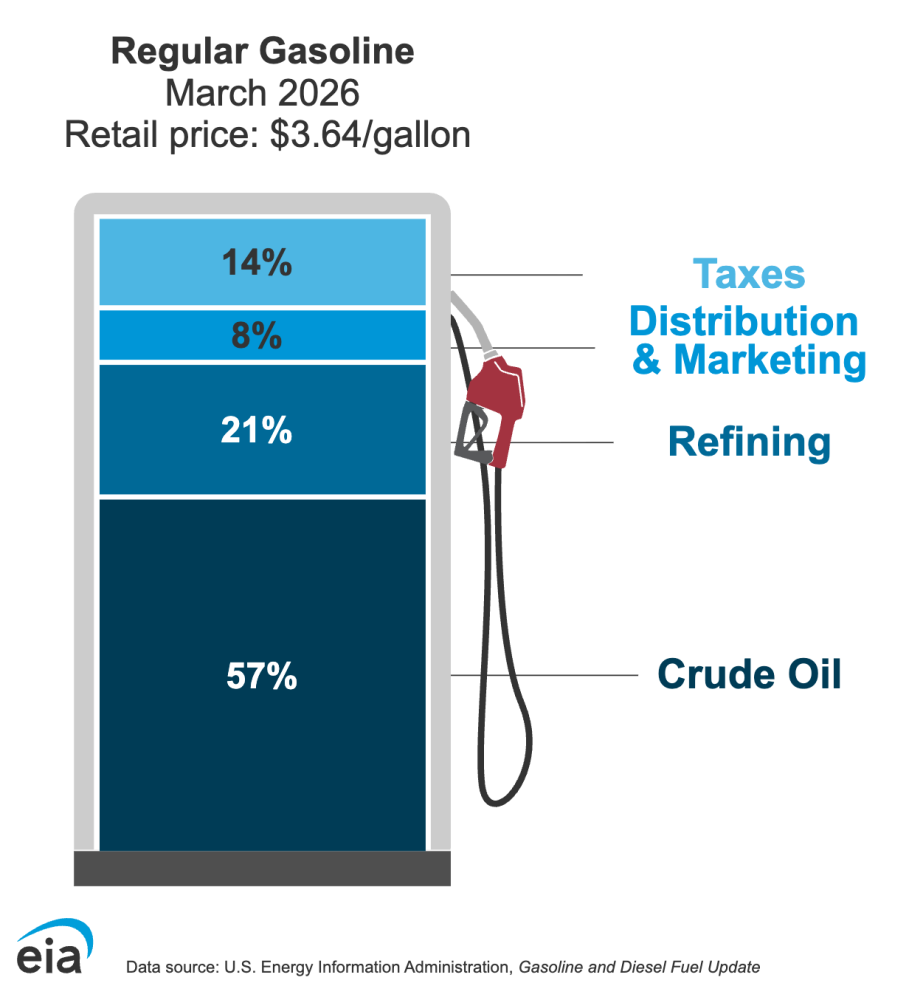
Crude oil is usually the largest factor in the price of gasoline, accounting for more than half of the cost in a recent breakdown. The rest reflects refining, transportation, distribution and taxes. Because those costs don’t always move with crude oil—and can rise during periods of disruption — gasoline prices don’t always move at the same pace as crude oil.
The journey to the pump
Prices react to headlines in seconds. Actual barrels move at the speed of tankers, pipelines and trucks. As we explored in The Tanker Timeline, physical supply chains operate in weeks and months, not hours and days.
Crude often sails first to a refining hub, becomes fuel, then ships again to its final market. Today’s gasoline was often refined from crude purchased days or weeks earlier. As a result, lower — or higher — crude oil prices typically take time to work through the supply chain before they’re reflected at the pump.
Global refining is constrained on three fronts at once
This year’s disruption has affected more than crude oil markets. Refining capacity has also been constrained, so gasoline markets have been tighter than crude markets. Today, three major refining regions continue to face challenges simultaneously.



The Persian Gulf. When people think about the Strait of Hormuz, they picture crude tankers. But some of the world’s largest export refineries also sit inside the Gulf. Continued disruptions affect both crude oil and refined fuels.
Russia. Ukrainian strikes on Russian refineries have pushed Russia’s refinery processing rates to 21-year lows. In response, Moscow has restricted exports of gasoline, diesel and jet fuel to keep fuel at home — removing a major supplier from world markets.
Asia. Many Asian refineries rely on Middle Eastern crude. Regional disruptions have limited refinery operations and reduced exports of finished fuels.
The result is a tighter global gasoline market — adding price pressures to gasoline specifically and separately from crude oil.
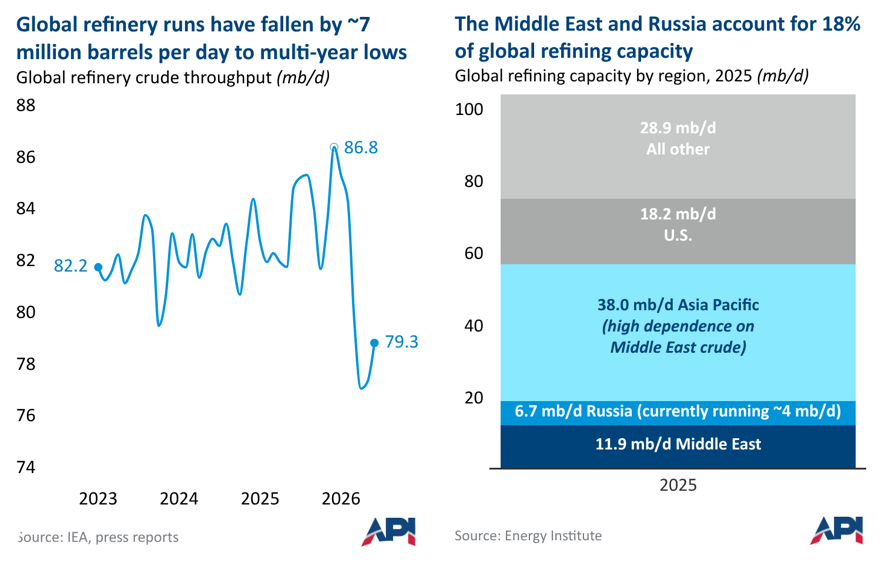
U.S. refiners are helping fill the gap. For the week ending July 3, U.S. refineries operated at 95.8% of capacity, producing 9.7 million barrels per day of finished gasoline (refined petroleum gasoline blended with ethanol). That is a system running flat-out to supply a tight fuel market at home and abroad.
Summer demand keeps gasoline tight
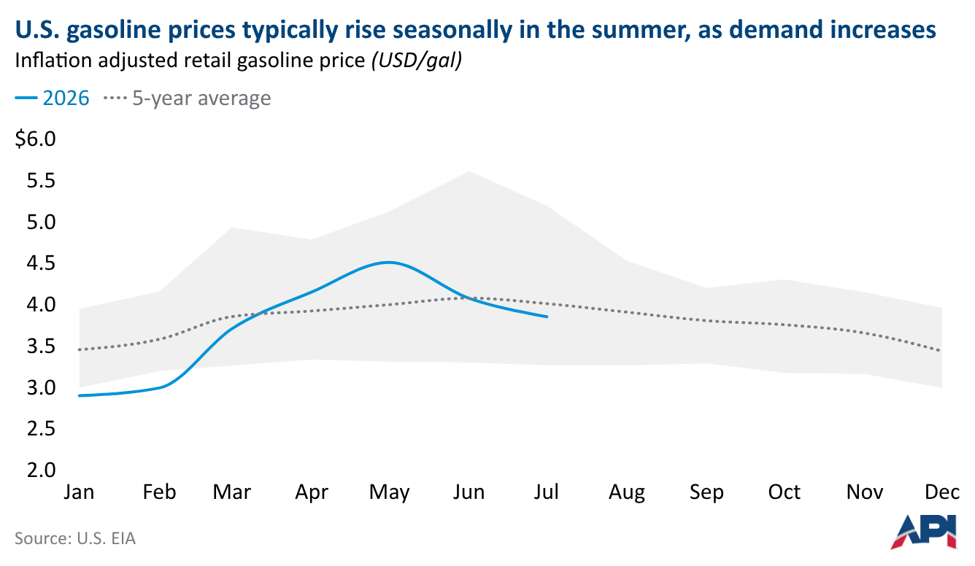
Americans drive more in summer than almost any other time of year, lifting demand. And summer gasoline costs more to make: refineries must produce seasonal blends that reduce emissions in warm weather, adding cost before fuel reaches the station.
Those seasonal factors have helped keep gasoline prices elevated even compared to changing crude oil prices.
The takeaway: America’s energy system has proven remarkably resilient
Throughout this disruption, America’s energy system has helped cushion consumers from even greater market volatility. Record domestic production, refineries operating at some of the highest utilization rates in the world, and continued investment have helped keep gasoline, diesel and jet fuel flowing despite extraordinary global uncertainty.
The bottom line: crude oil and gasoline are closely connected, but they are different products moving through different markets on different timelines. With escalation again in the Middle East, refining lost in Russia, products stuck behind the Strait, Asian exports diminished and peak demand for pricier summer blends, the fuel market has its own story.
Share This:


















COMMENTARY: US Energy Dominance Descends Into Decadence