CDN NEWS |
  US NEWS







By API – American Petroleum Institute
Months of disruption in the Strait of Hormuz have tested global energy markets, leaving the world with less cushion and less margin for error. Every country is facing the same disruption. But not every country entered it with the same energy system.
Across Europe and Asia, governments have responded with emergency measures to manage higher prices and tighter supplies. The European Union lowered winter natural gas storage targets after natural gas prices surged 45% in July. Japan and South Korea introduced emergency measures to soften higher gasoline, diesel, heavy oil and kerosene prices. Australia declared a national fuel emergency, released strategic fuel reserves and cut its fuel tax in half.
While many governments have relied on emergency measures, America’s resilience has largely come from decades of investment, technological innovation and infrastructure that strengthened the nation’s energy system long before this crisis began.
While inventories — both from the SPR and commercial — are drawing down and uncertainty remains, record oil and natural gas production, world-leading refining capacity and the world’s largest pipeline network have helped cushion Americans from the disruptions seen elsewhere.
This week’s American Energy Snapshot explains how.
Record production built on technology and innovation
American companies are delivering record amounts of energy when reliable supply matters most. The United States entered this disruption as the world’s leading producer of oil and natural gas — and continues producing both at record levels.
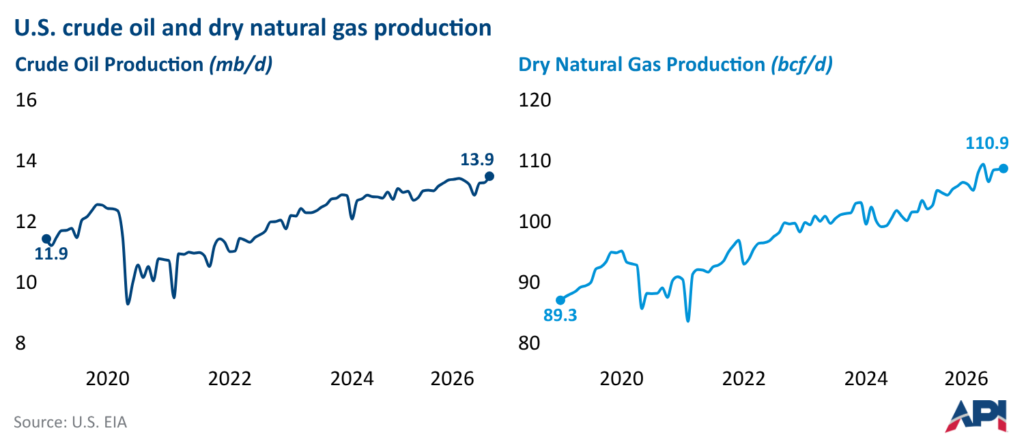
U.S. crude oil production reached a record 13.6 million barrels per day in 2025. EIA forecasts production will increase to 13.8 million barrels per day in 2026 and 14 million barrels per day in 2027. U.S. dry natural gas production also reached a record in 2025, increasing by 4.6 billion cubic feet per day (Bcf/d) to an average of 107.7 Bcf/d, with the EIA forecasting 111.3 Bcf/d in 2026 and 115.3 Bcf/d in 2027.
That performance was made possible by decades of investment in horizontal drilling and hydraulic fracturing, which transformed American energy production by unlocking more resources from wells while making rigs more productive.
Innovation continues to push those gains further. More than half the horizontal wells completed in the Permian Basin last year extended beyond two miles, with the longest reaching four. Since December 2022, Permian production has increased 18%, and companies have recently added 45 oil rigs to help keep energy flowing amid continued global pressure.



America’s refining advantage keeps fuel moving
Producing energy is only part of the equation. During a disruption, refineries determine how quickly crude becomes the fuels consumers depend on.
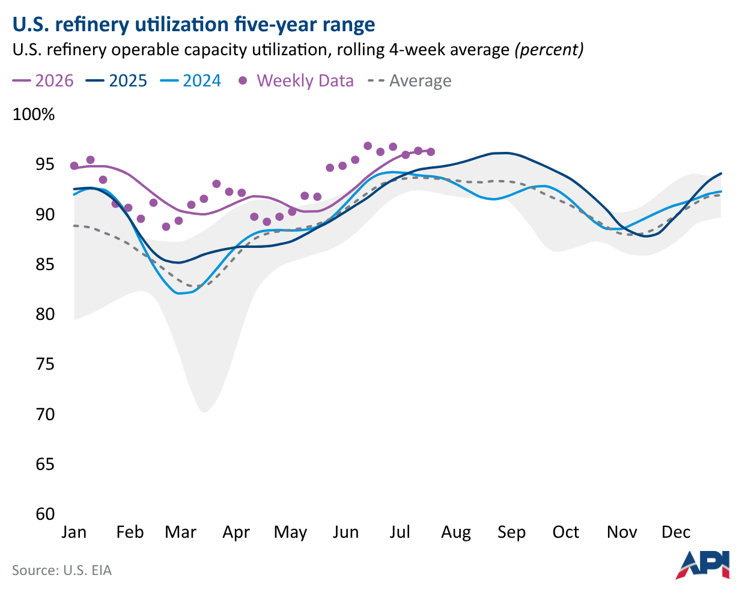
U.S. refineries have operated above 95% utilization for seven consecutive weeks, among the highest sustained utilization rates anywhere in the world. That performance reflects decades of investment, engineering expertise and technical excellence of the men and women who keep one of the world’s most sophisticated refining fleets running — processing a broad range of crude oils while continuing to deliver gasoline, diesel and jet fuel during periods of global stress.
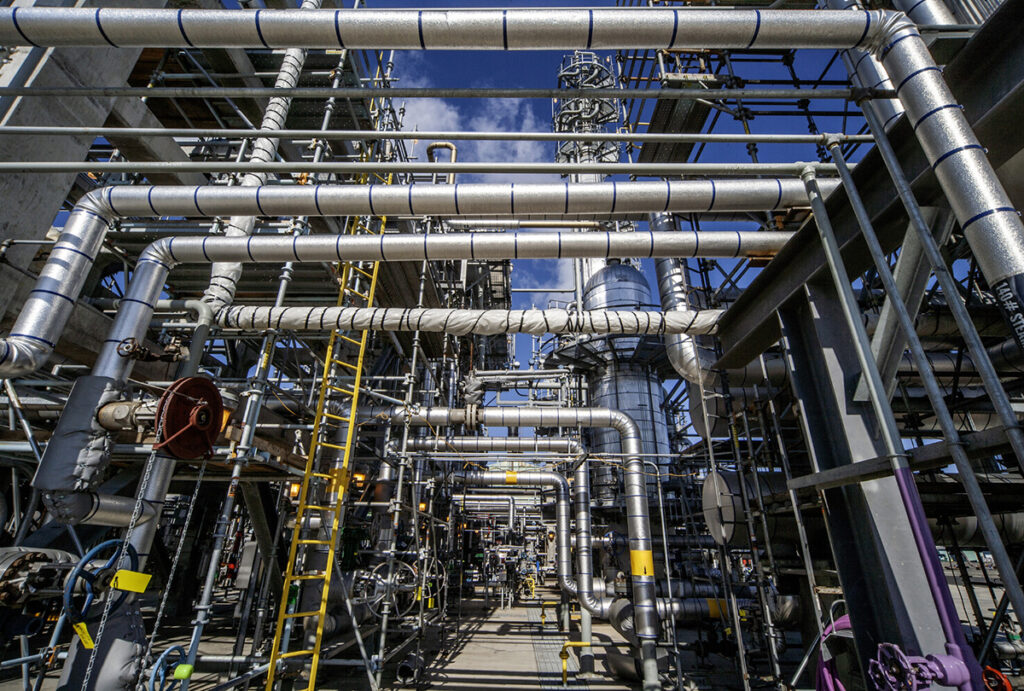
3.3 million miles of pipeline connect America’s energy system
Natural gas prices have surged across much of the world. In the United States, abundant domestic supply and 3.3 million miles of pipeline have helped keep prices well below many overseas markets.
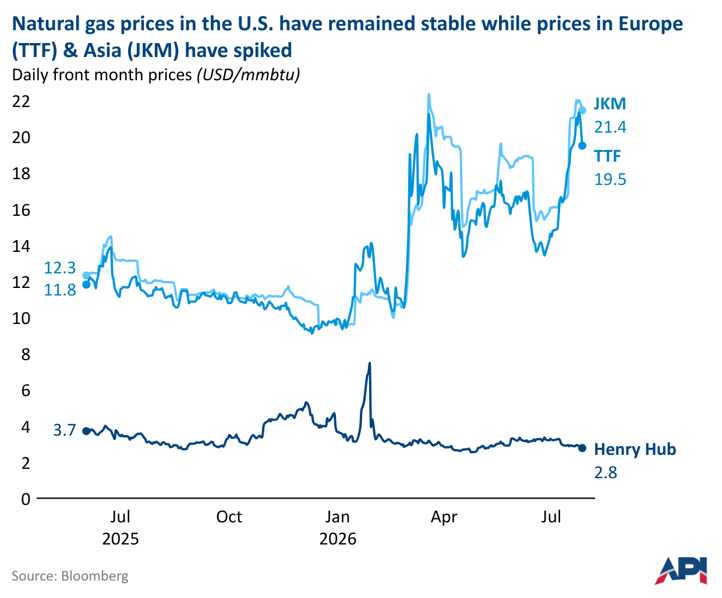
America’s existing pipeline network is the product of decades of investment and has been one of the country’s greatest strengths during this disruption, helping deliver affordable and reliable energy when the ability to move energy has mattered more than ever.
But energy security isn’t static. As we explored in a previous edition on infrastructure, strengthening resilience means continuing to invest in the pipelines and other infrastructure that connect American production with American consumers and global markets.
The takeaway
This crisis has become a real-world stress test for energy systems — and while global markets remain interconnected, America’s has performed remarkably well.
While many governments have relied on emergency measures and price interventions, America’s energy system has continued delivering. That resilience was built through decades of technological innovation, investment and operational excellence.
The lesson for policymakers is straightforward: the energy security serving America today was built long before this crisis began. Strengthening supply, infrastructure and resilience is how we prepare for the next one.
Share This: