CDN NEWS |
  US NEWS







By Julian Lee and Alex Longley
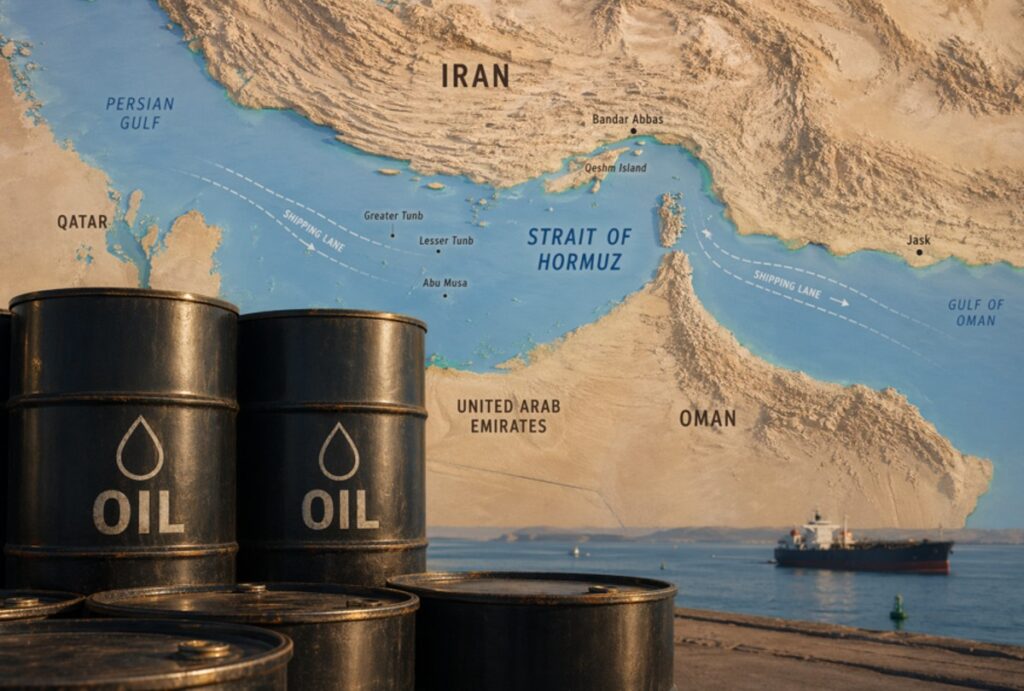
No region of the world produces more oil and gas than the countries straddling the Persian Gulf. Most of this energy can only be exported aboard tankers that cross the Strait of Hormuz — a waterway that’s effectively been blocked for more than three months.
Iran has throttled traffic through the strait since being attacked by the US and Israel in late February. It’s refused to reopen the vital shipping route until the US lifts a naval blockade imposed on Iranian ports.
Restoring free navigation has been a key sticking point in peace talks. As the stalemate continues, the economic pain from the Hormuz disruption is building across the globe. Supplies of oil, gas and other commodities are being increasingly squeezed and prices are much higher than before the war.
Source: Bloomberg
How has the Iran war affected shipping through the Strait of Hormuz?
Iran has sporadically attacked ships in and around the Persian Gulf, leaving most shipowners unwilling to attempt Hormuz crossings and risk the loss of life, cargo and vessels.
Some ships have braved the journey, turning off their transponders to try to avoid becoming targets. There’s evidence that the US military has quietly helped guide vessels through the waterway. Iran has also allowed certain ships to cross the strait via a corridor that hugs the Iranian coast, often after talks for safe passage and sometimes after requesting payments of as much as $2 million.
Nonetheless, the average number of daily ship transits through Hormuz has dropped below 10, from around 135 in peacetime. The collapse in traffic has forced oil producers in the region to halt most of their output as they run out of space to store their crude.
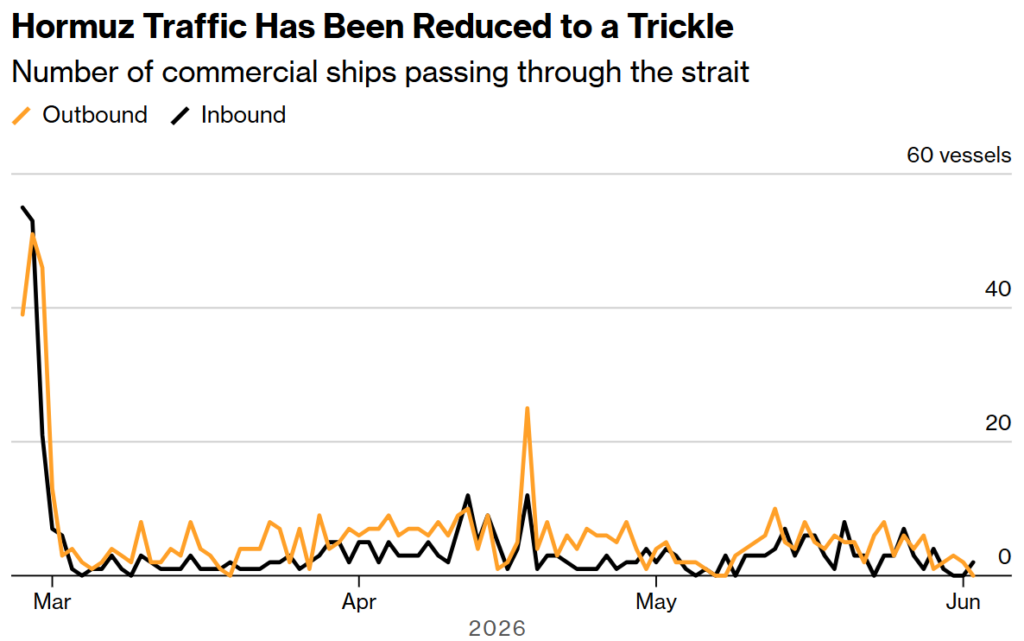
Note: Daily count of visible commercial ships based on AIS signals. Total transits in both directions observed until early June 2.
Source: Vessel tracking data from various platforms compiled by Bloomberg
Iran has resisted pressure from the US blockade to reopen Hormuz. It’s even expanded its claimed area of control and created a new entity called the Persian Gulf Strait Authority to control crossings. The Iranian ambassador to France, Mohammad Amin-Nejad, said that Iran is discussing how to set up some form of permanent toll system with Oman, which lies south of the strait.
What will it take to reopen the Strait of Hormuz?
A US-Iran peace deal is unlikely to lead to an immediate resumption of regular traffic. Shipowners need to have confidence that any vessels they send into the Persian Gulf will be able to get out safely and without delay. One issue is potential mines. Iran has said it’s laid mines along the most frequently used routes in the narrow strait.
Some operators may be unwilling to send their ships through Hormuz without a military escort. The US navy doesn’t have enough ships to protect the more than 100 vessels that usually transit the waterway each day, and the Trump administration has struggled to convince allies to deploy their naval assets immediately. The UK and France have been leading talks for a multinational coalition to help restore Hormuz shipping once there’s a sustained halt to the conflict.
Even if naval escorts materialize, it could take weeks to clear the backlog of ships on either side of the strait. The narrow width of the waterway limits the number of vessels that can be escorted at one time and leaves convoys vulnerable to attack.



What could the Iran war mean for the long-term future of Hormuz?
Shipowners, their insurers and customers have seen how easy it is for Iran — a country with virtually no conventional navy — to swiftly bring transits through Hormuz to a halt and how hard it is to restore normal operations.
Iran has signaled that it intends to continue exercising control over crossings and monetizing its leverage even once the war is over. If a US-Iran peace deal fails to remove the Iranian threat to Hormuz shipping, the economics of this key trade route could change for years to come. The most cautious ship operators may decide that sailing through the strait isn’t worth the risk under any circumstances. Higher insurance premiums may make Gulf trade uncompetitive versus other regions.
What’s the significance of the Strait of Hormuz?
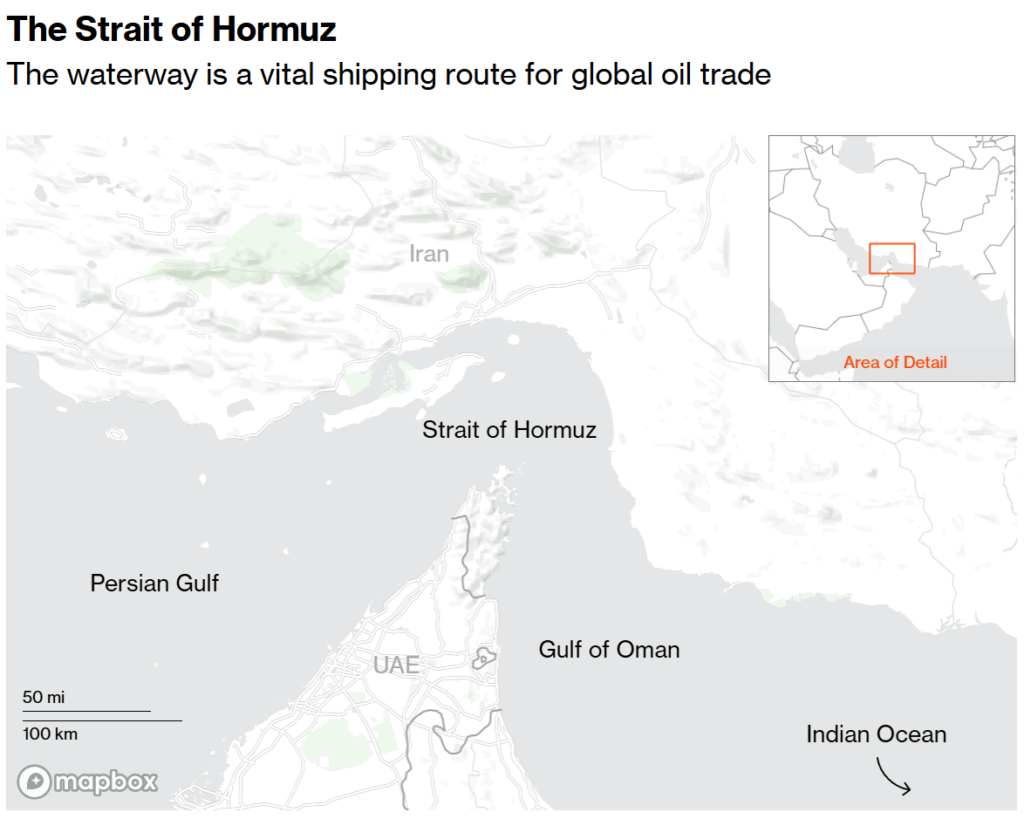
Situated between Iran to its north and the United Arab Emirates and Oman to its south, the Strait of Hormuz connects the Persian Gulf to the Indian Ocean. It’s around 100 miles (161 kilometers) long and 24 miles wide at its narrowest point. The shipping lanes in each direction are just two miles wide.
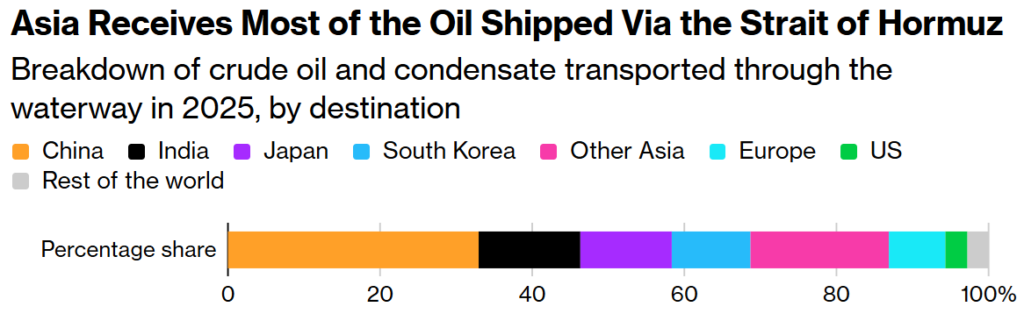
The strait is an essential route for the energy market, handling around a fifth of the world’s oil and liquefied natural gas supply. Saudi Arabia, Iraq, Iran, Kuwait, Bahrain, Qatar and the UAE all ship crude through Hormuz in normal times, and the majority of their cargoes go to Asia.
Source: Vessel tracking data compiled by Bloomberg
Gulf countries are also home to refineries that produce large volumes of diesel, jet fuel, naphtha — used to make plastics and gasoline — and other petroleum products that are exported globally via the strait.
Beyond energy, Hormuz is a choke point for products including aluminum, fertilizer and even helium, which is used in the production of semiconductors.
Can oil producers bypass the Strait of Hormuz?
Kuwait, Qatar and Bahrain have no other sea route for their exports.
Saudi Arabia, which ships the most oil through Hormuz, has rerouted its crude through a pipeline that runs westward to the Red Sea port of Yanbu. It exported 3.65 million barrels a day of crude from Yanbu in May. That’s a little over half the nation’s oil shipments in January, the most recent month unaffected by the Hormuz closure.
While the pipeline can transport 7 million barrels a day — roughly equal to the kingdom’s pre-war exports — some of the oil is reserved for domestic use. The route isn’t without risk, having been targeted by Iranian strikes.
The UAE can likewise bypass Hormuz via a pipeline that connects its oil fields to the port of Fujairah along the Gulf of Oman. But this conduit can carry less than half the country’s usual export volumes and infrastructure at both ends has been hit by Iranian attacks. State-owned Abu Dhabi National Oil Co. is accelerating construction of a second pipeline to double export capacity out of Fujairah by 2027.
A pipeline from northern Iraq to a Turkish Mediterranean port isn’t currently linked to the major oil fields in the south of the country. And while there are plans to revive shipments through neighboring Jordan and Syria, the amounts being considered are a small fraction of Iraq’s normal exports through Hormuz.
Does Iran have the right to control the Strait of Hormuz?
Under the United Nations Convention on the Law of the Sea, countries can exercise sovereignty up to 12 nautical miles (14 miles) from their coastline — an area known as their territorial waters.
The Strait of Hormuz runs through the territorial waters of Iran and Oman. However, nations must allow “innocent passage” of foreign vessels through their territorial waters and must not impede “innocent” or “transit passage” through straits used for international navigation. The treaty also says that countries cannot charge foreign ships merely for passage through their territorial waters.
While Iran’s government signed UNCLOS in 1982, its parliament never ratified the treaty.
Share This: