CDN NEWS |
  US NEWS







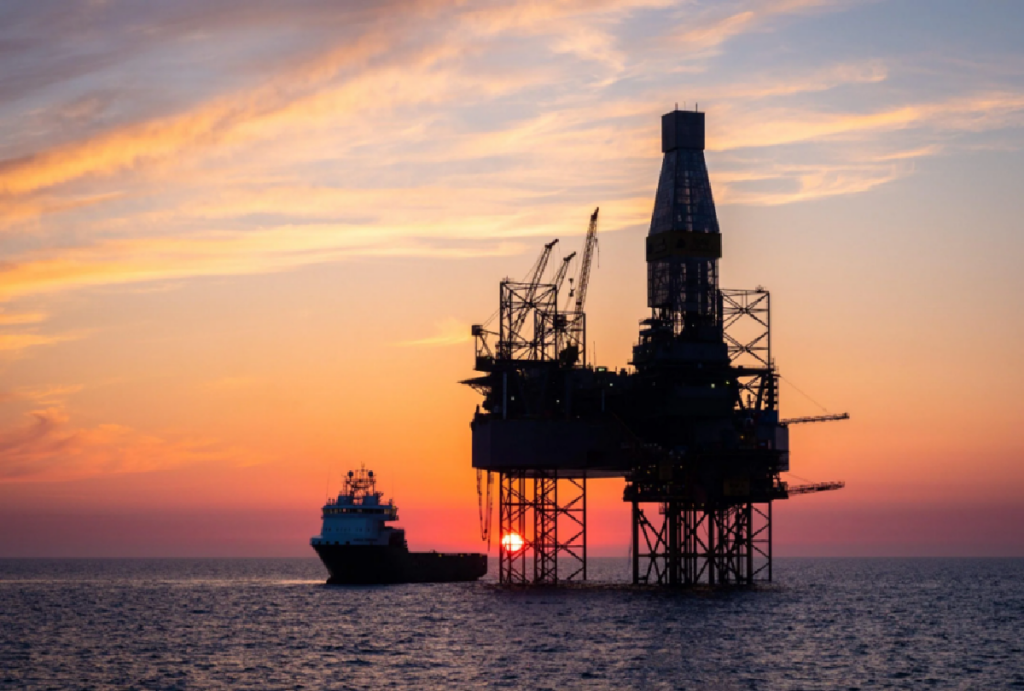
(Reuters) – The latest bout of political turmoil in Britain comes as energy security has moved front and centre following the Iran war, offering the next prime minister a chance to rethink the country’s North Sea oil and gas strategy. Andy Burnham, who is poised to succeed Prime Minister Keir Starmer following his resignation earlier this week, has provided few details of his economic vision, beyond describing it as “business-friendly socialism”.
One of his central challenges will be balancing the country’s long-term climate ambitions with the more urgent need to tackle high energy bills that have burdened households and businesses in recent years. In that context, the future of the ageing North Sea oil and gas industry has become a key domestic battleground, amplified by U.S. President Donald Trump’s repeated criticism of Starmer’s energy policies. Since taking office two years ago, the Labour premier imposed tough restrictions on the oil and gas sector. His government raised taxes on producers to among the highest levels globally while curbing new exploration, effectively accelerating the North Sea basin’s long-anticipated decline.
The rationale was clear: prolonging the life of the North Sea sits uneasily with Britain’s climate targets, and reducing reliance on volatile fossil fuels should, over time, make the economy more resilient. There is merit in that argument. Climate change, driven by greenhouse gases that come largely from fossil fuels, remains a serious economic, social and political threat over the long term. Britain’s heavy dependence on oil and gas also leaves it exposed to swings in global prices, which have grown more pronounced in recent years.
Yet as long as fossil fuels remain integral to the UK economy, the case for prioritising domestic production over imports remains compelling, especially as geopolitical conflicts are becoming more frequent and severe.
IMPORTING EMISSIONS, EXPORTING JOBS
The past few years have underscored that point. Russia’s invasion of Ukraine in 2022, followed by the Iran war, provided stark reminders of the risks of overreliance on overseas energy supplies.
Every barrel produced in Britain reduces, in principle, the need for imports from distant and often geopolitically sensitive regions, particularly in the Middle East. This is especially true for natural gas, much of which is delivered directly to the domestic market via pipelines.
There is also an environmental dimension. Imported fuels tend to carry a higher carbon footprint than locally produced ones, with liquefied natural gas (LNG) standing out.
According to the International Energy Agency, imported LNG can generate 60% to 70% more emissions than domestic pipeline gas, reflecting the energy-intensive processes of liquefaction, transport and regasification.
The economic case is equally persuasive. The domestic oil and gas sector supports thousands of British jobs and billions of pounds in investment. Phasing out the North Sea while continuing to consume hydrocarbons does not eliminate demand; it simply redirects capital and employment overseas.
DECLINE OF FOSSIL FUELS
Britain has made considerable progress in reducing its reliance on fossil fuels in recent years through the rapid expansion of renewable energy, especially offshore wind.
In fact, wind was the largest source of electricity generation for a second consecutive year in 2025, accounting for 30%, followed by gas at 27%, while coal use fell to zero for the first time since the industrial revolution, according to the National Energy System Operator.
However, the rise of renewable generation, which is intermittent by nature, has increased the need for flexible backup capacity, usually provided by gas. When wind speeds drop or demand spikes, gas-fired power plants remain the primary stabilising force. This dependence is unlikely to disappear until storage technologies, such as batteries, are deployed at scale. That could take 20 years or more. So even though gas demand has been in structural decline in the UK, it remains a cornerstone of the country’s energy system and is unlikely to be displaced for decades.



SECURITY IMPERATIVE
Against that reality, the trajectory of the North Sea is striking.
North Sea gas production still supplies roughly half of Britain’s needs, with Norway providing about 75% of imports and LNG making up the remaining 25%.
Once a global pioneer of offshore production, the North Sea basin has been in steady decline for years.
Output peaked at more than 4 million barrels of oil equivalent per day in the late 1990s but fell to around 1.1 million boepd last year and is projected to decline to roughly 650,000 boepd by 2030, according to the North Sea Transition Authority.
This drop reflects both natural depletion and a prolonged period of underinvestment.
Yet the basin is far from exhausted. Estimates suggest it still holds as much as 11.2 billion boe in prospective and undeveloped resources, roughly 28 years of production at 2024 levels.
Unlocking that potential would require substantial investment, and not all resources will prove commercially viable. But the energy industry has repeatedly demonstrated its ability to extend the life of ageing fields through improved recovery techniques and new drilling.
Neighbouring Norway is a case in point. Its North Sea sector has repeatedly outperformed expectations, sustaining output and even growing production in recent years thanks to continued exploration and development. That resilience proved critical in helping Europe offset the collapse in Russian gas supplies after 2022.
Reversing the sharp decline in Britain’s production would require policy shifts, including loosening restrictions on exploration and creating a clearer, though not necessarily lower, tax framework. Providing operators with greater certainty could help attract investment back into the basin.
Britain’s new leadership has an opportunity to recalibrate. Correcting course in the North Sea need not come at the expense of climate ambition. Done properly, it could strengthen energy security, support the economy and deliver lower emissions.
And the country may have little choice. At a time when geopolitical tensions are elevated and energy prices are volatile, maximising domestic resources has become a strategic imperative.
The opinions expressed here are those of Ron Bousso, a columnist for Reuters.
Ron Bousso Editing by Marguerita Choy
Share This: