CDN NEWS |
  US NEWS







By Tammy Nemeth & David Blackmon
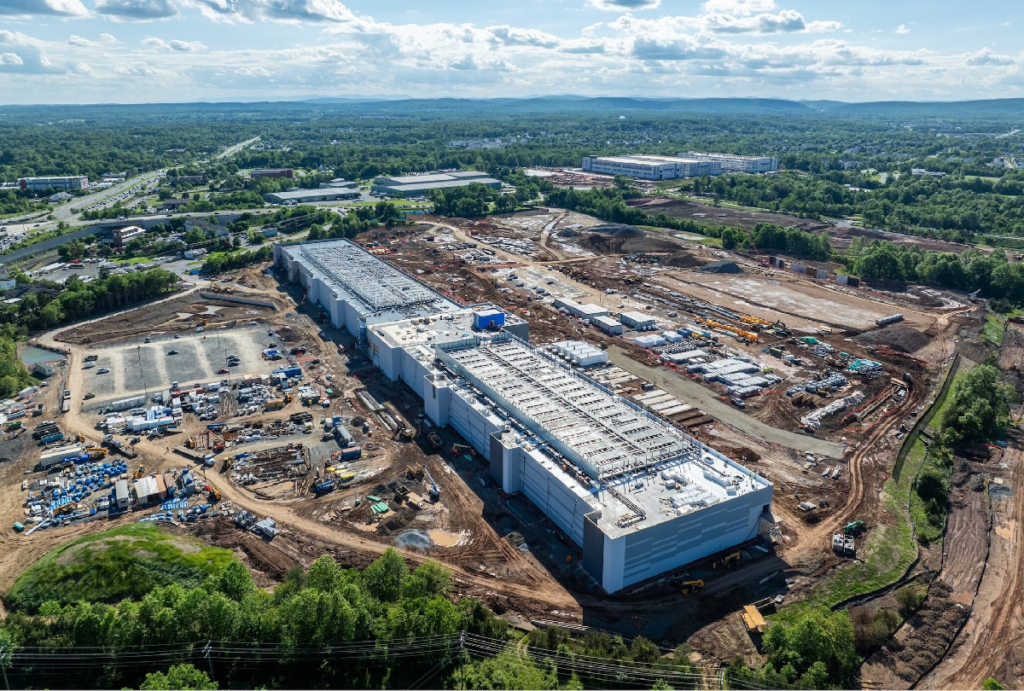
Across rural Virginia, suburban Utah, and farm communities in the Midwest, residents are showing up at planning meetings to voice real worries about massive new data centers: noise, water use, electricity demand, and the conversion of farmland into industrial zones matter. Yet what appears as spontaneous local pushback increasingly bears the hallmarks of national coordination. The same well-funded environmental organizations and donor networks that spent two decades fighting Canada’s oil sands, U.S. fracking, pipelines, coal plants, and related infrastructure have now pivoted to target the power backbone for artificial intelligence.
Scratch the surface and the continuity is unmistakable. In Virginia, the epicenter of U.S. data center opposition, 42 activist groups are campaigning to halt new projects. Nationally, over 230 environmental organizations—including Greenpeace, Friends of the Earth, 350.org, the Environmental Defense Fund, and the Sierra Club—signed a December 2025 letter demanding a full moratorium on new data centers. This mirrors the “Keep It in the Ground” coalitions once aimed squarely at hydrocarbons. The organizational muscle, funding trails, messaging discipline, and rapid mobilization are anything but grassroots.
More recently, activists from the Soros-funded Indivisible NGO invaded Temple, Texas to organize against a proposed data center near that community. On May 18, the Bitcoin Policy Institute issued a report tracing Chinese money funneled through various Open Society NGOs to help fund a Capitol Hill event opposing AI development organized by Vermont Senator Bernie Sanders.
The motivations came into sharp focus at the recent Global Progress Action Summit in Toronto. John Podesta, founder of the Center for American Progress and former White House climate advisor under Presidents Obama and Biden, warned that if data centers encourage the use of fossil fuels, “it will doom our chance to build a net-zero world.” For progressive and climate networks that have battled oil, gas, and coal for decades, the AI-driven surge in demand for reliable, dispatchable power represents an existential threat. Intermittent renewables cannot reliably meet 24/7 computing loads. Hydrocarbons and nuclear remain the practical solutions—precisely what activists have worked to constrain.
Major foundations such as the Rockefeller Brothers Fund and the Tides Foundation poured millions into anti-oil sands and anti-pipeline campaigns in Canada, backing both established groups and local-sounding initiatives. The same channels now support opposition to data centers: national organizations and pass-through vehicles like the New Venture Fund, Open Society Foundations, the Oak Foundation, and Sixteen Thirty Fund provide resources, legal support, media training, and infrastructure to amplify seemingly independent outfits. Power the Future’s May 2026 letter to Congress highlighted millions in potentially billionaire-funded and foreign-backed flows to these efforts. Reports have documented over $39 million from foreign donors to groups active in this space.
Tactics are familiar. Professional organizers help form rapid “start-up” activist entities. Standardized messaging floods meetings. Instances of bused-in participants appear, as developer Kevin O’Leary noted at a Box Elder County, Utah, project he backs. Pop-up groups, often staffed or funded by longstanding networks, create the veneer of organic revolt. This is the same astroturfing strategy deployed against Keystone XL, oil sands projects, and fracking: seed local resistance, amplify fears, manufacture the appearance of broad opposition.
Genuine local concerns deserve attention, but activists are exploiting and exaggerating them with the old fear playbook. Data centers do consume significant electricity and water. Yet many claims about electricity costs are myths. Kristen Walker has identified evidence that data centers are not driving up residential rates and in several cases are actually lowering them. Virginia, home to 13% of the world’s data centers and using roughly 25% of its own electricity consumption from these facilities, maintains residential rates below the national average, as does Texas.
Various studies confirm that data centers spread high fixed grid costs across more kilowatt-hours, improving efficiency through steady, predictable 24/7 load. Pacific Gas & Electric in California cut rates 11% in part due to data center growth. Northeastern states with far fewer data centers have seen the biggest rate hikes—thanks to net-zero policy choices, not new demand. And while data centers use significant water for cooling, it is often non-potable, treated wastewater that is recycled rather than drawn from community drinking supplies.
Positive contributions like jobs, tax revenue, and innovation get downplayed or ignored, just as economic benefits were minimized in past anti-hydrocarbon fights. Blanket moratoriums do not reduce overall energy need; they shift it elsewhere or cede technological leadership.



Still, the data center industry has created its own problems with inept communications, failure to conduct up-front public outreach to build trust, and strategic errors that border on corporate malfeasance. These provide fertile ground for exploitation. A prime example is Project Sail in Coweta County, Georgia managed by San Francisco-based Prologis in partnership with Atlas Development, LLC. Despite concerns from local citizens, the project received permits in early April 2026. Opposition exploded after Georgia Power sought eminent domain to condemn about 30 homes and more than 300 individual properties for a transmission line. Videos of a young woman spreading accusations about the project – most accurate, some less so – spread like wildfire and within a month Prologis and Atlas faced a major PR problem.
Prologis could have de-escalated by pledging alternative power sources or by building on-site generation. Instead, it held firm, likely for economic reasons, delivering a national public relations black eye for the entire industry.
Similarly, Kevin O’Leary – Television’s “Mister Wonderful” on ABC’s “Shark Tank” – has fallen flat with locals for his company’s project in Utah, coming off as evasive and unconvincing, resulting in another PR disaster for the entire industry.
Tech is being outmaneuvered on communication. While engineers and executives focus on building the future, activists exploit legitimate fears—water use, grid strain, landscape transformation—using the same fear-based playbook refined against oil sands, coal, and fracking. Media amplification and regulatory pressure follow. In 2025 alone, opposition stalled or blocked projects worth tens of billions. Moratorium efforts have advanced in multiple states, with even more rejections and cancellations in early 2026. The result risks slowing AI’s national security, economic, and productivity advantages while the same ideological networks advance their goals.
Local voices should shape outcomes through transparent permitting and genuine reviews. But manufactured campaigns that distort facts and exploit anxieties undermine informed consent. Congressional inquiries into funding sources, as requested by Power the Future, would bring needed sunlight.
We have seen this movie before: activists weaponize fear to impose anti-energy and anti-development policies; the same is now happening to digital infrastructure. Tech leaders must recognize that communication is everything at this juncture. Ignoring the coordinated playbook will not make it go away. Genuine local concerns deserve solutions, not exploitation by national networks recycling old battles. The future of American.
Tammy Nemeth Ph.D. is a UK-based energy and ESG analyst, leading ESG2Insight.
David Blackmon is an energy writer and consultant based in Texas. He spent 40 years in the oil and gas business, where he specialized in public policy and communications.
Want More? Listen to Their Podcast on the Subject
Dr. Tammy Nemeth and energy expert David Blackmon break down their explosive new article on how the same environmental organizations that fought oil sands, fracking, and pipelines have now pivoted to block data centers and America’s AI boom. From astroturfed local opposition and Arabella and Soros-funded networks to the real impacts on power demand, water use, and economic growth — discover the coordinated playbook threatening U.S. technological leadership. They expose the funding trails, messaging tactics, and why poor industry communication is making the problem worse. Legitimate concerns are being exploited and exaggerated as a way to prevent green-lighting reliable energy. Essential listening for anyone interested in AI, energy policy, data centers, and Big Green activism in 2026.
Share This: